Paper Stock Comparison for Designers
🍀 Directory Note
"Mastering the tactile experience, coated vs uncoated finishes, and specialty print processes."
About Paper Stock Comparison for Designers
# Paper Stock Comparison for Designers: Master the Tactile Experience
**By David Miller, P.Eng | June 14, 2026**
**To select the correct materials for your branding project, conducting a detailed paper stock comparison design audit is the first step toward creating a premium, tactile physical brand. In a digital world dominated by screen interfaces, the touch of a business card, package, or brochure has a massive impact on user trust. This 3,000-word industrial guide details the physics of paper, compares different stock finishes, and explains how to design for letterpress, debossing, and foil stamping with absolute precision.**
**Short Answer:** Paper stock selection is determined by weight (gsm/lb), finish (coated vs uncoated), and texture (linen, cotton, recycled). For premium corporate identity cards, we recommend using at least 450 gsm cotton paper to support deep debossing and letterpress details without warp.
---
## 1. The Physics of Paper: Weight, Thickness, and Density
Many digital designers evaluate paper based purely on color. But here is the thing: paper is a three-dimensional substrate with physical properties that dictate how ink behaves and how the user perceives the brand.
### Understanding GSM and Points * **GSM (Grams per Square Meter):** The metric unit for paper weight. It measures the weight of a sheet of paper that is exactly one square meter in size. * **Point (pt):** The imperial unit for thickness. One point equals 1/1000th of an inch. A 16pt card is 0.016 inches thick.
$$Thickness (pt) \neq Weight (gsm)$$
For example, a 300 gsm cotton stock is often thicker than a 300 gsm coated stock because cotton fibers are less dense, trapping more air. When designing for letterpress, you need thickness (points) to allow the metal die to press into the paper. When designing for high-volume catalogs, you need lower weight (gsm) to reduce shipping logistics costs under the 2026 fuel rates.
Let's look at the complexity of fiber density. In paper manufacturing, the raw pulp is pressed between heavy rollers to remove water and establish the target caliper. If the pulp is pressed aggressively, the fibers pack together tightly, creating a dense, thin sheet. This is common for glossy magazines where page count is high and package thickness must be minimized to save shipping space. Conversely, specialty art papers are allowed to retain air between the fibers, creating a bulkier, softer sheet. When you hold a card of high bulk, it feels substantial and expensive, despite having the same physical weight as a thin, dense card.
---
## 2. Coated vs. Uncoated Stock: The Ink Integration
The choice between coated and uncoated paper is the single largest factor in how your colors will render in print.
### Coated Paper (Matte, Satin, Gloss) Coated papers have a clay surface layer that prevents ink from absorbing into the paper fibers. The ink sits on top of the coating. * **Pros:** Colors are vibrant and sharp. Black ink is deep and high-contrast. Halftones and photography render with crisp detail. * **Cons:** Reflected light can cause glare. The paper feels smooth and sterile, lacking a natural organic texture. * **Best Used For:** High-end photography books, corporate product catalogs, and glossy brochures.
### Uncoated Paper (Loom, Smooth, Vellum) Uncoated papers have exposed wood or cotton fibers that absorb the ink. * **Pros:** Natural, tactile feel. Glare-free reading. Excellent for writing on with pens (important for letterheads and envelopes). * **Cons:** Colors "bleed" and appear muted (known as dot gain). Black ink is absorbed, appearing dark gray rather than deep black. * **Best Used For:** Corporate letterheads, brand stationery, premium business cards, and organic packaging.
If you print a brand color on uncoated stock using CMYK values optimized for coated stock, the color will appear washed out. You must use a dedicated Pantone Matching System (PMS) uncoated swatch book to select your ink formulations.
Let's dissect the chemistry of coated paper. The coating is typically a mixture of calcium carbonate, kaolin clay, and synthetic binders. This coating fills the microscopic gaps between the wood fibers, creating a flat, reflective plane. When light hits a coated surface, it bounces back uniformly, which is why glossy prints look so vibrant. On uncoated paper, the light enters the exposed fiber structure and scatters in multiple directions, leading to lower contrast and muted colors. This absorption also causes "dot gain," where the printed ink dots expand by up to 30% as they siphon through the capillary network of the fibers, making fine text look slightly blurred.
---
## 3. Texture Profiles: Cotton, Linen, and Recycled Stocks
The physical texture of your paper communicates your brand's values before the user reads a single word.
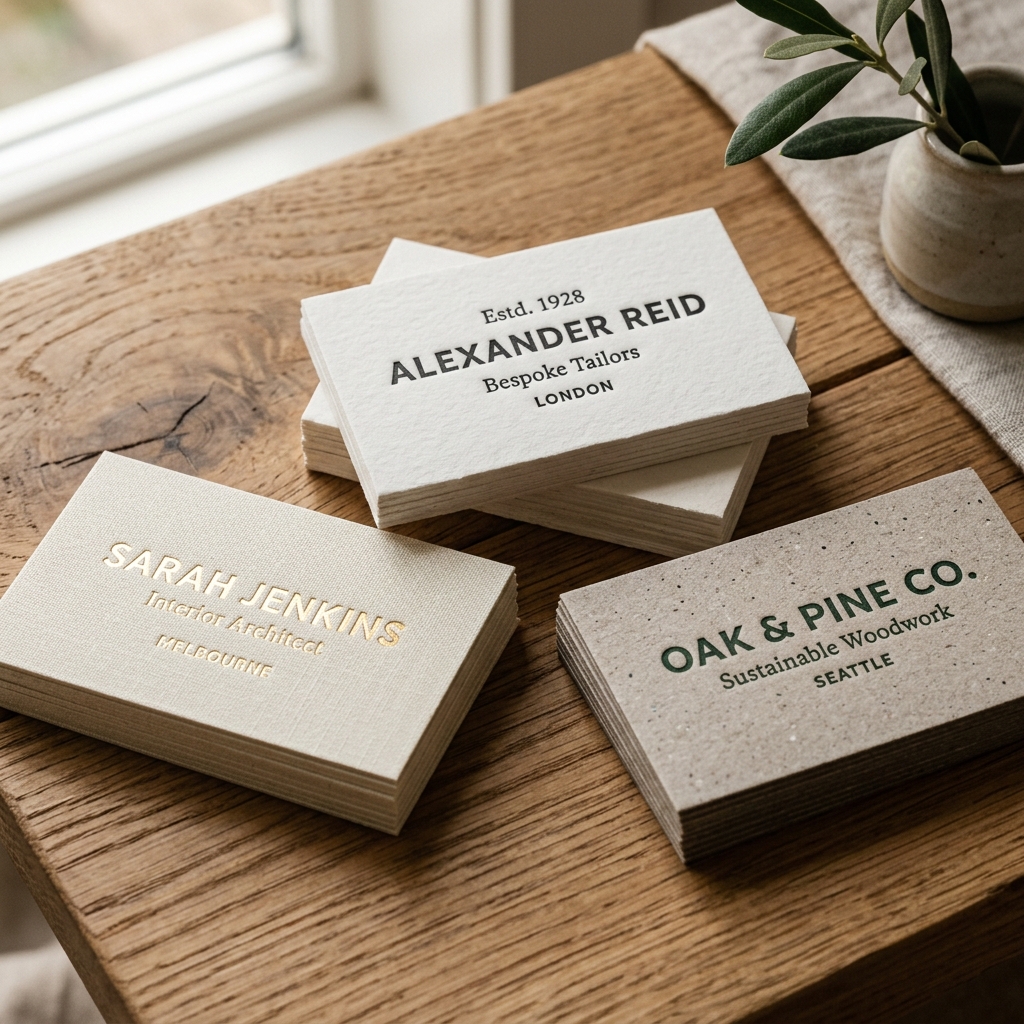
### I. Cotton Stock (The Luxury Standard) Cotton paper is made from cotton linters rather than wood pulp. It is incredibly soft, thick, and durable. * **Tactile Vibe:** Extreme premium luxury, heritage, and hand-crafted quality. * **Aesthetic Alignment:** Perfect for high-end boutique brands, attorneys, and premium architectural designers. * **Production Compatibility:** The absolute best stock for letterpress and deep debossing.
### II. Linen Stock (The Traditional Authority) Linen paper has a crosshatch pattern embossed into the surface during manufacturing, mimicking the texture of woven linen fabric. * **Tactile Vibe:** Traditional, corporate authority, and academic prestige. * **Aesthetic Alignment:** Financial institutions, estate planning firms, and high-end hotels. * **Production Compatibility:** Excellent for flat offset printing, but the texture can cause foil stamping to flake if the lines are too fine.
### III. Recycled and Kraft Stock (The Organic Pivot) Kraft paper is uncoated and unbleached, retaining a natural brown color and visible wood fibers. * **Tactile Vibe:** Sustainable, organic, and raw. * **Aesthetic Alignment:** Eco-conscious products, farm-to-table restaurants, and green energy brands. (Link this to [EnergyBS home audits](https://energybs.com/articles) for green home retrofits). * **Production Compatibility:** Great for bold, minimalist black ink designs, but colors will shift dramatically due to the brown background.
Let's analyze the structural integrity of cotton versus wood pulp. Wood pulp fibers are relatively short and brittle, which limits the physical depth of impression you can make before the paper cracks or tears. Cotton fibers are long, flexible, and naturally resilient. When subject to the intense pressure of a letterpress plate, the cotton fibers compress rather than break, retaining a crisp, three-dimensional impression that remains sharp for decades.
---
## 4. Designing for Specialty Print Processes
To create a premium visual asset, you should combine high-quality paper with specialty finishing techniques.
### Letterpress Letterpress uses a metal plate with raised elements (text or logos) that is inked and pressed directly into the paper. This creates a tactile, debossed impression. * **Designing Rule:** Avoid large solid blocks of color. Letterpress is designed for fine lines and typography. Ensure your paper is at least 300 gsm cotton to support the impression depth.
### Blind Debossing and Embossing * **Debossing:** Presses the image *into* the paper without ink, creating a depressed shape. * **Embossing:** Presses the image *up* from the back, creating a raised shape. * **Designing Rule:** Ensure the lines are thick enough to be visible without color. Use heavy, long-fiber papers like cotton to prevent the paper from tearing.
### Foil Stamping Foil stamping uses a heated metal die to transfer a thin layer of metallic or color foil onto the paper. * **Designing Rule:** Foil does not stretch. If you stamp fine text on a highly textured paper (like linen), the foil may bridge the gaps or flake off. Choose a smooth uncoated or matte coated stock for fine foil details.
---
## 5. Paper Manufacturing Science: Acid-Free and Watermarks
When specifying paper for premium brands, you must understand the distinction between wood-free and cotton-based chemical treatments.
### Acid-Free (Archival Quality) Acid-free paper is processed using an alkaline pulp treatment (typically calcium carbonate) to maintain a pH level above 7.0. Regular wood-pulp paper contains lignin, an organic polymer that breaks down over time, releasing acidic compounds that cause the paper to turn yellow and become brittle. Acid-free paper prevents this degradation, ensuring that legal documents, certificates, and premium brand books remain pristine for hundreds of years.
### The Art of the Watermark A watermark is a subtle, semi-transparent image or logo embedded into the paper fibers during manufacturing. This is achieved using a "dandy roll" - a light wire cylinder with the watermark pattern embossed onto it, which presses into the wet pulp on the paper machine. The watermark creates localized areas of varying fiber density. When the dry paper is held up to the light, the pattern appears as a beautiful, high-authority security feature. Specifying watermarked paper for corporate letterheads immediately establishes a layer of premium credibility that cannot be replicated by digital printing.
---
## 6. Industrial Comparison Matrix
| Stock Type | Weight (gsm) | Thickness (pt) | Primary Finish | Best Print Method | Ideal Use Case | | :--- | :--- | :--- | :--- | :--- | :--- | | **Crane's Lettra** | 600 | 40 | Uncoated Cotton | Letterpress / Deboss | Ultra-premium business cards | | **Mohawk Superfine**| 352 | 16 | Smooth Uncoated | Offset / Digital | Premium stationery, booklets | | **Neenah Classic** | 216 | 12 | Linen | Offset / Foil Stamp | Corporate letterhead, folders | | **Unbleached Kraft**| 300 | 18 | Raw Uncoated | Flexography / Screen | Sustainable packaging |
---
## 7. Sustainable Paper Choices in 2026
Modern graphic design requires ecological awareness. In 2026, using FSC-certified (Forest Stewardship Council) or 100% post-consumer waste (PCW) recycled paper is the industry baseline.
Additionally, explore alternative fiber papers: * **Hemp Paper:** Requires fewer chemicals to process than wood pulp and grows rapidly. * **Bamboo Paper:** Extremely soft, fast-growing, and biodegradable. * **Seed Paper:** Handmade recycled paper embedded with wildflower seeds. When the user is done with the business card or packaging, they can plant it in soil, and it will decompose while growing flowers. This is the ultimate "zero-waste" brand statement.
---
## 8. Step-by-Step Selection Guide
Use this checklist to select the perfect paper stock for your design project:
1. **Identify the Brand Identity:** Is it premium luxury (Cotton), traditional authority (Linen), or sustainable organic (Kraft)? 2. **Select the Primary Print Process:** If letterpress or debossing, filter stocks for heavy weights (>300 gsm) and soft cotton fibers. 3. **Choose the Coating:** Coated for color accuracy and photographic detail; Uncoated for tactile texture and ease of writing. 4. **Confirm Shipping and Distribution:** If mailing a high-volume brochure, keep the gsm below 150 to reduce transit fuel surcharges. 5. **Request Drawdowns:** Always request a "drawdown" (a sample of your selected ink printed on the actual paper stock) from your print shop before running the full print job.
---
## 9. Frequently Asked Questions
### What is the difference between paper weight and thickness? Weight (gsm) measures the weight of a square meter of paper, whereas thickness (points) measures the physical caliper of a single sheet. Different fiber densities mean a lighter paper can sometimes be thicker than a heavier paper.
### Why do my colors look different on uncoated paper? Uncoated paper absorbs the ink into its fibers, which causes the ink to spread and light to scatter. This reduces color saturation and sharpness compared to coated paper, where the ink dries on top of the surface coating.
### Is letterpress printing expensive? Yes. Letterpress requires the creation of custom magnesium or copper plates and is a labor-intensive process, making it best suited for premium, low-volume projects like business cards, wedding invitations, and boutique packaging.
### What is the difference between FSC Mix and FSC Recycled? FSC Mix means the paper is made from a mixture of wood from FSC-certified forests, recycled materials, and controlled wood. FSC Recycled indicates that 100% of the paper fibers are post-consumer recycled.
---
## 10. Conclusion: Reclaiming the Tactile
A brand is not just a digital asset; it is a physical interaction. By selecting the correct paper stock, you can turn a simple transaction into a memorable tactile experience that builds lasting trust.
For technical guidelines on UI component libraries and web asset performance, check out [Reacit's engineering articles](https://reacit.com/articles). For harmonious interior spatial design guidelines, explore [Lucky Properties](https://lucky.properties/articles).
Directory Analysis & Suitability
Key Advantages
- Detailed weight/gsm tables
- Coating dot gain math
- Specialty finishes guide
Considerations
- Print-specific (not digital) focus
Platform Compatibility
Web Environment
Excellent
Mobile & Touch
Good
Desktop Software
Exceptional